
Service
Remote Camp Management for Australian Project Sites
Ngurra provides remote camp management for Australian project sites — operating client-owned camps and partner-supplied accommodation to a consistent hospitality and safety standard.
Helpful to include: project scope, camp size, location, mobilisation date and required services.
Management-only is one of two ways to engage Ngurra. It applies to Village Operations and Field & Drilling Operations. If you don’t hold the camp, see turnkey.
Remote camp management is the day-to-day operating layer that sits between an accommodation asset and the workforce living inside it. When it is done well, the workforce is rested, fed and looked after and the project keeps running. When it is done poorly, small failures accumulate quickly and the site loses time it cannot afford to lose.
Ngurra Solutions operates as the accountable manager on your camp. We coordinate the catering, housekeeping, front-of-house, camp services and reporting under one operating framework, and we take responsibility for the workforce experience end to end.
The model is deliberately practical. We favour experienced site managers, well-trained crews, honest reporting and calm operational discipline. Where accommodation assets are not already in place, we coordinate them through verified project partners on an asset-light basis.
Operational problems we help resolve
- Inconsistent hospitality standards affecting workforce retention and morale.
- Multiple sub-contractors with fragmented reporting and unclear accountability.
- Weak transition planning creating risk during contract or operator change.
- Compliance gaps in food safety, hygiene, HSE and camp conduct.
- Underused occupancy data and no meaningful trend reporting for the client.
- Participation reported after the fact. By the time the roster and supply chain are locked, there's nothing left to change. We scope it before that point.
Scope of work
Our scope typically covers the full operating envelope of a camp — catering, housekeeping, laundry, front-of-house, waste management, camp conduct, camp administration and coordination of trades and sub-contractors on site. It also includes the reporting and document control that let the client see how the camp is performing.
Where the client already has preferred providers for specific functions, we integrate rather than displace. Scope is confirmed in writing before mobilisation.
What is included
- On-site management with a documented duty structure and escalation.
- Catering operations against an agreed menu cycle and dietary standards.
- Room cleaning, linen changes and laundry to a defined standard.
- Front-of-house, room allocation and check-in/check-out coordination.
- Waste and hygiene management.
- Food safety, HACCP-aligned processes and hygiene auditing.
- Camp conduct support and coordination with the client’s site rules.
- Regional and Indigenous employment and procurement, scoped at mobilisation.
What Ngurra coordinates through partners
Delivered on an asset-light basis with verified project partners.
- Accommodation, ablutions and dining infrastructure where not owned by the client.
- Mobilisation logistics, transport and specialist equipment as required.
- Camp fit-out, refurbishment and demobilisation works.
Service models
Management-only: Ngurra operates a client-owned or partner-supplied camp under a defined scope and service level. The client retains the asset; we take accountability for the service and the workforce experience.
Turnkey (asset-light): Ngurra coordinates accommodation, mobilisation and operations through verified project partners under a single delivery interface. This is typically used where the client wants one accountable relationship rather than several.
Both models are commercial-in-confidence and structured around the project term, roster, remoteness and reporting requirements.
Mobilisation and transition
Step 01
Scope and site walk
We confirm scope, roster pattern, camp condition, existing assets and any incumbent handover requirements.
Step 02
Operating plan
We build the operating plan, menu cycle, cleaning schedule, HSE integration and reporting framework with the client.
Step 03
Crew build and training
We recruit, induct and train the site crew against the regional and Indigenous participation plan set at scoping.
Step 04
Go-live and stabilisation
We mobilise on the agreed date, stabilise operations against the plan and confirm the reporting cadence.
Reporting and governance
Reporting is designed to be useful, not decorative. Standard outputs include occupancy trends, service delivery against agreed standards, food safety and hygiene checks, incident and near-miss records, complaints and resolutions, and participation metrics.
Cadence and format are agreed during scoping so the client’s project controls receive information in a shape they can already use.
Safety considerations
We work inside the client’s HSE management system and add operating controls specific to a residential environment: food safety, hygiene, fatigue-aware rostering for our crew, safe handling and manual tasks, and clear camp conduct expectations.
Safety is treated as an operational discipline. Our managers are expected to walk the site every day and raise issues early.
If you are evaluating a new operator, transitioning a camp between contractors, or setting up a fresh camp for an upcoming project, we would welcome an early conversation. The most useful proposals come from a scope call before pricing.
Send us the project scope, camp size, location and mobilisation date and we will come back with next steps.
We reply the same business day.
Prefer email? hello@ngurrasolutions.com.au
Capability within Camp Management
Catering
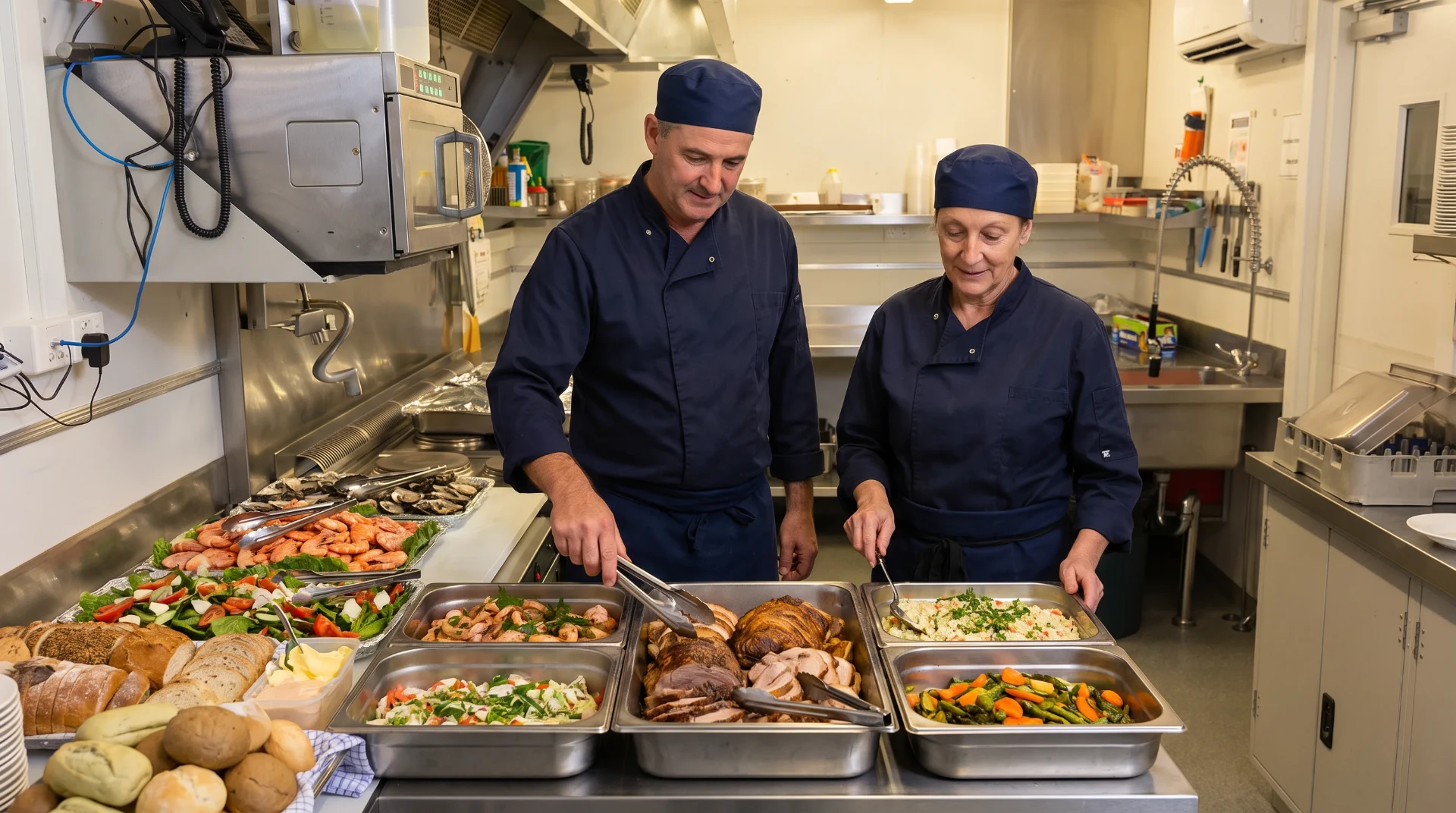
Menus are chef-led, workforce-tested and reviewed with the client on a rotating cycle. Dietary, allergen and cultural requirements are planned in from the start, and the food safety framework is HACCP-aligned and auditable.
Breakfast, lunch, dinner, crib and shift meals are built into one daily service plan so night crews are fed to the same standard. Where the client already provides the kitchen, we operate to it; where infrastructure is coordinated by Ngurra it happens through verified partners under a clearly scoped arrangement.
- Chef-led rotating menu cycles
- Documented dietary and allergen handling
- Crib and shift meal service
- HACCP-aligned food safety plan
- Supplier management, local where possible
- Workforce feedback loops and menu iteration
Capability within Camp Management
Housekeeping, laundry & soft services
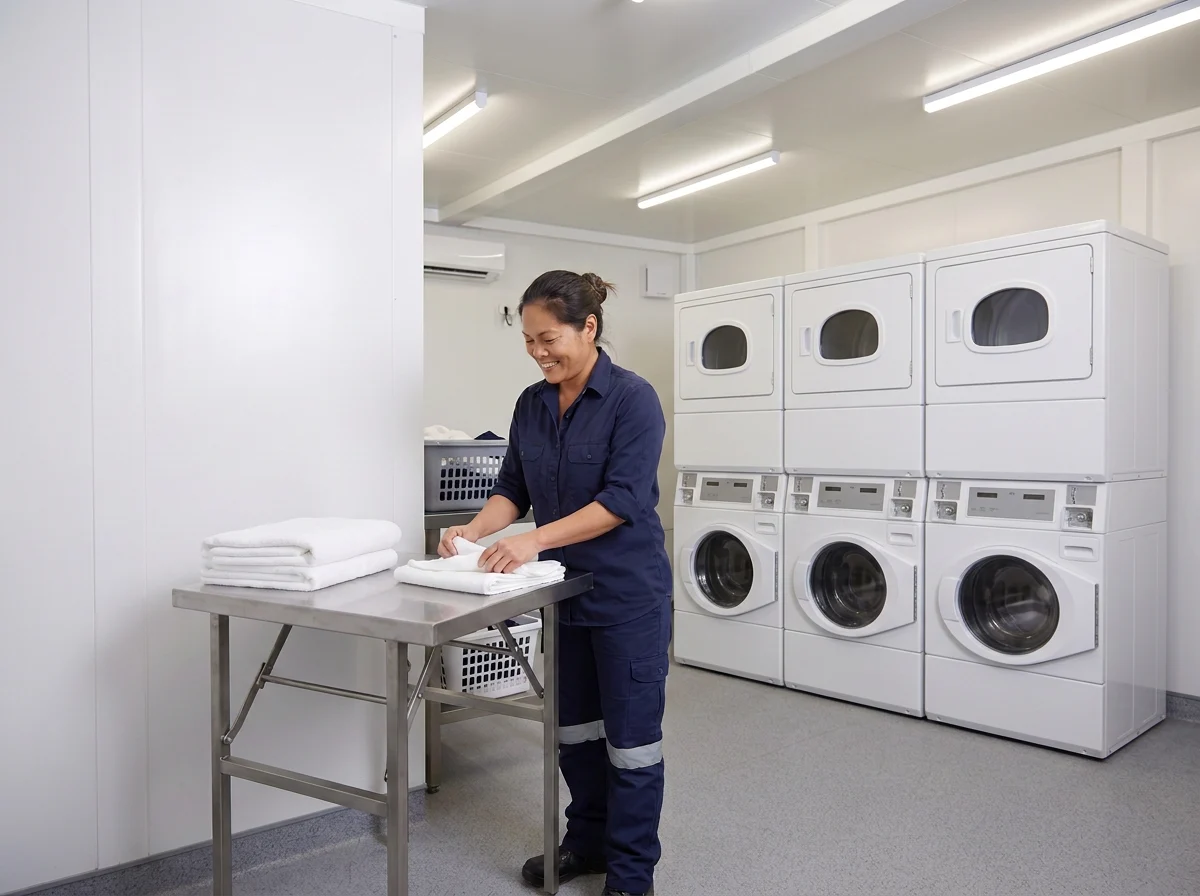
Rooms are cleaned to a defined standard, linen is changed on a documented cycle, and laundry is turned around so the workforce always has what it needs. Soft services extend to front-of-house, room allocation and waste.
Standards and frequencies are agreed before mobilisation and audited internally so slips are caught early. Consumables and chemical use are managed to reduce risk to residents and cleaners alike.
- Daily and departure room cleaning
- Linen changes and laundry to a defined standard
- Front-of-house and room allocation
- Waste and hygiene management
- Common-area presentation
- Chemical, PPE and manual handling controls
Capability within Camp Management
Accommodation operations
Accommodation operations cover the day-to-day running of client-owned or partner-supplied camps — check-in and check-out, room allocation, occupancy and POB reporting, camp conduct, and coordination with the client’s security, medical and transport arrangements.
Ngurra operates on an asset-light basis: the accommodation itself is retained by the client or supplied by verified project partners, while Ngurra is accountable for how the camp runs. Occupancy data feeds structured reporting rather than sitting in a spreadsheet no one reads.
- Check-in / check-out and room allocation
- Occupancy and POB reporting
- Camp conduct and resident support
- Coordination with security, medical and transport
- Front-of-house and after-hours cover
- Integration with client HSE management systems
Frequently asked questions
Do you provide management-only services for camps we already own or lease?
- Yes. Ngurra frequently provides management-only services for client-owned or partner-supplied accommodation. We take responsibility for daily operations, workforce experience, hospitality standards and reporting while the accommodation asset remains under the client’s or partner’s control.
Can you take over an existing camp mid-project?
- Yes. We are set up to transition existing operations with minimal disruption to the workforce. Timelines depend on site conditions, contractual arrangements and the level of change required; we scope this before mobilisation.
What sectors do you typically support?
- We support mining, oil and gas, drilling and exploration, infrastructure and renewables projects across regional and remote Australia. Our approach adapts to the roster pattern and reporting requirements of each client.
How do you approach Indigenous engagement and local participation?
- We map the region before we build the crew. During scoping we identify the regional labour market, Traditional Owner groups and Indigenous enterprises connected to the project area, and the roles they could hold. That feeds directly into the recruitment and supply plan. We then report what we achieved against it, including the gaps.
Do you own accommodation assets?
- Ngurra operates on an asset-light basis. Accommodation, ablutions and mobile infrastructure are provided by verified project partners when required.
What reporting will we receive?
- Standard reporting includes occupancy, service delivery against agreed standards, incident and near-miss records, food safety and hygiene checks, and participation metrics. Cadence and format are set during scoping.
How do we start an enquiry?
- Contact us with the project scope, camp size, location, mobilisation date and the services you need. We will arrange a scope call and outline the next steps to a formal proposal.
Related services and information
Ready to scope your project?
Tell us the project scope, camp size, location, mobilisation date and required services. We will respond with a tailored delivery approach.